
“In the first year of Belshazzar king of Babylon Daniel had a dream and visions of his head: four great beasts came up from the sea…fourth beast, which was diverse from all the others, exceeding dreadful, whose teeth were of iron, and his nails of brass; which devoured, brake in pieces, and stamped the residue with his feet; And of the ten horns that were in his head,
“the ten horns which thou sawest are ten kings, which…receive power as kings one hour with the beast. These have one mind, and shall give their power and strength unto the beast.” (Daniel 7:1-9, Revelation 17:12
Only for “one hour” – TEMPORARILY.
Then they turn on the beast, currently the United States.
This interpretation of scripture is validated by the history of the ten kings / top-ruler-by-any-title listed below who had been given power by the U.S. in an attempt to pacify the restless natives. In reaction, their subjects have had an internal rebellion turning on their “king” and his king-maker.
The following list is given in the order in which the U.S. established foreign relations.
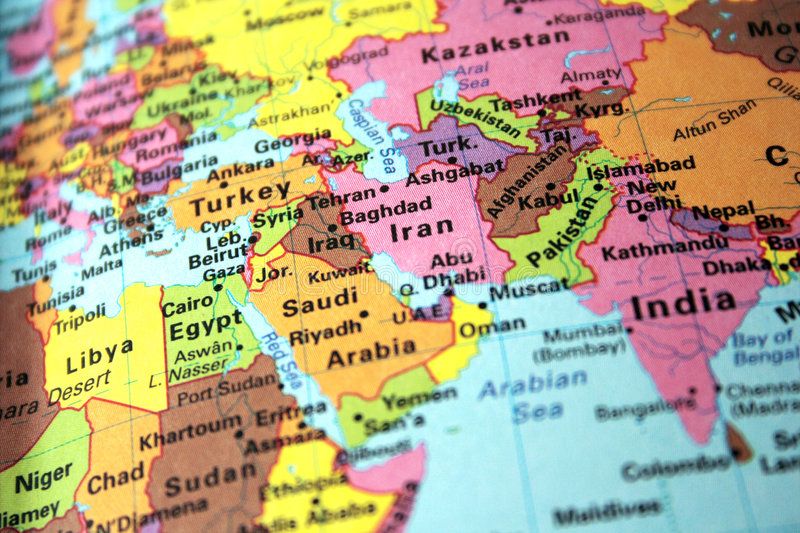
1. Afghanistan 1921
Relations between Afghanistan and the United States began in 1921 due to its location at the boundary of the Western Great Powers and their Eastern European adversary Russia.. After the Soviets invaded Afghanistan in 1979 the United States supported the Afghan resistance as a proxy war with the Soviet Union, delivering billions of dollars in cash and weapons at an overall $2 trillion price, as well as providing military training to as many as 35,000 Afghans at an estimated cost of $800 million” during the 9-year long Soviet–Afghan War.
Between 562,000 and 2 million Afghans were killed, 6 million people became refugees mainly in Pakistan and Iran.
From 1996 – 2001 an Islamic fundamentalist group of “Students” / Taliban spread throughout most of Afghanistan, ruling 3/4 of the country as the Islamic Emirate of Afghanistan, providing Osama bin Laden’s al-Qaeda sanctuary from which to lead his Islamic revolution.
Given America’s preoccupation with controlling this key territory, there is every reason to consider that America used 9/11 as a false war trigger.
On October 7, 2001, U.S. and British forces launched Operation Enduring Freedom, an airstrike campaign against al Qaeda and Taliban targets. On December 6, Kandahar fell, signaling the official end of Taliban rule in Afghanistan and causing al Qaeda, and bin Laden, to flee.
Congress appropriating more than $38 billion for President Bush’s Marshall Plan to reconstruct Afghanistan in America’s image.
Given the Afghanis’ track record in resisting the British and Soviet Union’s efforts to become overlords, it should absolutely not come as a surprise that the American effort utterly failed after giving it our best shot for two decades spanning four U.S. presidencies, becoming the longest war in American history, costing $2 trillion.
Between 562,000 and 2,000,000 Afghans were killed – between 6.5%–11.5% of Afghanistan’s population – and millions more fled the country as refugees, mostly to Pakistan and Iran, and the war caused grave destruction to Afghanistan’s infrastructure.
As for Public Enemy #1, Osama bin Laden, the US government claimed in 2011 that “Over the last ten years…around the globe, we worked with our friends and allies…years.of painstaking work by our intelligence community… took many months to run this thread to ground.
Then they secretly killed him and disposed of his body at sea.
What thinking person can take any of this seriously? It is far more believable that the US faked this scenario to prop up its public image during its abysmal failure to achieve any goals in Afghanistan.
The United States entered peace talks with the Taliban in February 2019 and two years later President Joe Biden, in April 2021, set the symbolic deadline of September 11, 2021, the 20th anniversary of the 9/11 attacks, as the date of full U.S. withdrawal from Afghanistan.
However, this was pre-empted when, in just 10 days, from August 6-15, 2021, the Taliban swiftly overtook provincial capitals, and America’s proxy Afghan government collapsed. The world watched in real time television broadcasting as the great American power was humiliated at Kabul Airport, and Turkish President Erdogan stepping into the security gap left by departing US troops.
America’s only military legacy after 20 years’ war in Afghanistan is death and destruction. According to the United Nations, some 5 million Afghanis have been displaced by the war since 2012, making Afghanistan the world’s third-largest displaced population.
America’s disastrous foreign policy in Afghanistan is perpetuated in all its Middle Eastern policies. One could call them Meddle Eastern policies, marked by immense arrogance.
2. Egypt 1922
Egypt controls the Suez Canal. Opened in 1869, it remains one of the world’s most critical marjitime chokepoints. As of early 2022, an estimated 10% of global trade, including 7% of the world’s oil, flows through the Suez Canal.
In 1922, immediately following its independence from protectorate status under Great Britain, the U.S. established diplomatic relations with Egypt.
Since 1946, the United States has provided Egypt with over $85 billion in bilateral foreign aid (calculated in historical dollars—not adjusted for inflation)…Successive U.S. Administrations have justified aid to Egypt as an investment in regional stability, built primarily on long-running cooperation with the Egyptian military and on sustaining the 1979 Egyptian-Israeli peace treaty.
This began breaking down in 2022 when Qatar began economically supporting Egypt, “but after October 7, they became closer, especially given the economic crisis in Egypt.” This Qatari economic investment in Egypt has manifested in animosity toward Israel, as well as support for Hamas and, now, Iran.
3. Turkey 1927
The United States was the first nation to establish diplomatic relations with the newly-formed Turkish Republic after the European winners of World War I dismantled the Ottoman Empire in 1927
The resulting transformation of policy has been America’s continuous involvement in war, which has warped our constitutional order, the course of our national development, and the very mentality of our people.
In 1952 Turkey became a key NATO Ally and critical regional partner as Turkey straddles the West and East, sharing borders Greece, Bulgaria, Georgia, Armenia, Azerbaijan, Iran, Iraq, and Syria, and is a key partner for U.S. policy in the surrounding region.
In April 2025 the fall of the Assad regime in Syria significantly weakened Iran and its “Axis of Resistance,” which seeks to expel U.S. forces from the Middle East and destroy the state of Israel.
In its place, however, the United States now faces the rise of a Turkish-backed axis that shares the same goals.
4. Iraq 1930
Iraq as a named territory dates back to the founding of Islam, becoming the centre of Islamic rule, with Baghdad becoming a global hub for culture, science, and intellectualism. Two years prior to Iraq’s full independence from Great Britain’s mandate after the dissolution of the Ottoman Empire, the US Ambassador to Great Britain established foreign relations with this key nation in the region.
But in 2003 the Iraq War began with the invasion of Iraq by the United States–led Western coalition under false pretenses that Iraq had a weapons of mass destruction (WMD) program, and that Iraq posed a threat to the United States and its allies. No stockpiles of WMDs or an active WMD program were ever found. United Nations’ Secretary General Kofi Annan called the invasion illegal, while a British inquiry into its decision to go to war concluded that the war was unnecessary.
The U.S. invasion of Iraq is rightly considered to be a major strategic blunder that destabilized the Middle East, consumed significant American resources, and sapped the power of the United States. For Iraq, the overthrow of Saddam Hussein’s repressive regime cost the lives of hundreds of thousands of people, displaced and wounded millions more, and wrought widespread destruction.
A prominent feature of Iraqi politics is the presence of militias—with the combined strength of over one hundred thousand fighters that often work at cross-purposes to the military.
In addition, Iraq’s sovereignty remains compromised: Turkey’s security forces maintain a string of bases in northern Iraq from which they target the Kurdistan Workers’ Party (PKK), a militant group that has been waging an on-again off-again war against Turkey since the mid-1980s. Iran’s Islamic Revolutionary Guard Corps (IRGC) is also present in Iraq, mostly to coordinate with pro-Iran militias. And in recent years, Israel has been suspected of undertaking air strikes against the IRGC and pro-Iran groups in Iraq. Iranian influence extends beyond militias into Iraq’s government ministries and economy.
When Iraqi Prime Minister Mustafa al-Kadhimi came to power in 2020, he used the personal ties he developed while serving as Iraq’s intelligence chief to improve relations with Egypt, Jordan, Saudi Arabia, and the United Arab Emirates.
Iraq is vulnerable to the machinations of its neighbors, and it remains wracked with political, economic, and social problems.
5. Saudi Arabia 1933
In 1933 full diplomatic relations with Saudi Arabia were established with U.S. businesses involved in Saudi Arabia’s oil industry. The Standard Oil Company of California (now Chevron) won a sixty-year concession to explore, forming a partnership with Texaco, Exxon and Mobil helped Saudi Arabia become one of the world’s largest oil exporters. This business relationship was governmentally formalized under the 1951 Mutual Defense Assistance Agreement. The U.S. provides military protection to the Kingdom in exchange for a reliable oil supply and support for American foreign policy, despite the Saudi government’s human rights abuses and lack of democratic representation documented annually by the State Department.
Incensed that the elite was too accommodating to Western and non-Muslim interests, Saudi-born Osama bin Laden founded al-Qaeda and issued a fatwa against “Americans occupying the land of the two holy mosques”. The Saudi government’s total arms imports increased to almost eighteen times greater in 2017 than they were a decade earlier, and that year Trump signed a series of arms deals expected to total some $350 billion over a decade.
6. Iran 1935
Iran – known as Persia until 1935 – was fending off British and Russian colonial interests during the Great Game, and even during being invaded by them in WWII, making the US an appealing alternate Western ally.
But beginning in 1950, the popularly elected 30th Prime Minister of Iran, a member of the Iranian Parliament since 1923, Mohammad Mosaddegh introduced a range of social and political measures, with his most significant policy being the nationalisation of the Iranian oil industry to fund benefits to the masses of Iranian people.
In 1953, the Iranian coup d’état, engineered by the United States and the Western Bloc, set up Shah Mohammad Reza Pahlavi to rule in favor of Western interests against the Iraqi peoples’, leading to the arrest and exile of opposition Islamic religious leader Ayatollah Khomeini in 1964.
In 1978, strikes and demonstrations paralyzed the country, and engineered the Ayatollah’s return to re-establish an Islamic state in early 1979.
Washington quickly learned that it failed to account for the role of government legitimacy in maintaining regime stability. As such, the U.S.’s previous dependence on Iran quickly proved to be a key weakness in its Middle East foreign policy.
On June 13, 2025 Prime Minister Netanyahu attacked Iran without warning, claiming the right to proactively protect Israel from the “existential threat” Iran’s nuclear program imposes. After about a week of insistence from all regulatory bodies involved, Netanyahu changed his explanation to “nuclear and missile bombardment” existential threat since Iran had retaliated in kind to Israel’s daily attacks.
The campaign marks yet another step in the erosion of international law and diplomatic norms most evident in the Gaza war. While the exchange of fire between the two countries is not new, the extent of Israel’s offensive is unprecedented and seems to have two goals: dismantling Iran’s nuclear program and destabilizing the Iranian regime by destroying its military capacity. The attack has caused significant damage to Iran’s military capacities as well as nuclear facilities, including the Natanz nuclear site.
Iran is in its most vulnerable position in decades. The country’s missile production facilities and air defenses were significantly damaged by Israel’s October 2024 attack. Its economy has been weakened by decades of extensive sanctions, and its forward defense strategy, namely its reliance on powerful regional partners and proxies such as Hezbollah, Hamas, and Ansar Allah, has been decimated over the past year and a half of the Gaza war. Additionally, the fall of Bashar al-Assad’s regime in Syria disrupted Iran-Hezbollah weapons supply routes.
Much will depend on whether the United States, which has signaled support for Israel’s actions, will allow itself to be dragged more directly into the conflict. President Trump has indicated in a tweet that the United States may provide the munitions needed.
What we can say for certain is that the region is now in the throes of a profound transformation that will take years if not decades to fully manifest itself.
7. Syria – 1944
Diplomatic relations between Syria and the United States began in 1835 during the French Mandate, and were continued following Syria’s independence in 1944. After the militant Islamic Ba’athist Party seized power in 1963, and Syria severed diplomatic relations with the United States during 1967’s Arab-Israeli War. In 1979 the US government added Syria, ruled by the autocratic Assad family, to its first list of “State Sponsors of Terrorism”. From the period of the “War on Terror“, the U.S. government has imposed economic sanctions on Syria and supported rival militant group’s attempts to overthrow the Assad regime, which they achieved in 2025, following which the U.S. has no clear relationship with Syria.
8. Pakistan – 1947
In 1946, Britain announced it would grant independence to the Indian subcontinent. The population was about 25% Muslim, with the rest mostly Hindu. “Partition seemed to be a quick and simple solution.”

About 15 million people travelled, often hundreds of miles, to cross the new frontiers.

Left to their own devices, “The Muslim League formed militias and so did right-wing Hindu groups.” Between 200,000 and one million people are estimated to have been killed or died of disease in refugee camps.
On 15 August 1947, one day after the independence of Pakistan… the United States became one of the first nations to establish relations with Pakistan.
The challenge of dealing with Pakistan is subsumed in the broader challenge of managing US relations with the Islamic world. In countries whose leaders receive financial incentives to promote America’s objectives rather than the values and welfare of their population, authoritarian measures are inevitably required to enforce America’s demands and the leadership’s continued power and wellbeing, inevitably leading to popular opposition to local leadership and the American Way. Specifically with respect to Pakistan, religious extremism thus came to find wider sponsorship and popular support.
Pakistan has the world’s sixth-largest standing armed forces. It is a declared nuclear-weapons state, and is designated as a major non-NATO ally by the United States.
Following Israel’s attack on Iran Pakistan’s Permanent Representative to the UN, strongly condemned what he described as the “unjustified and illegitimate” aggression by Israel against Iran. He reaffirmed that Islamabad stood in resolute solidarity with the Iranian government and its people. Iran’s Foreign Minister, Abbas Araghchi, requested the Security Council meeting, stating that Israel “has now crossed every red line, and the international community must not allow these crimes to go unpunished.”
Amid mounting tensions, the Pakistani envoy urged the Council to uphold international law and immediately halt the aggression.
9. Jordan 1949
After the Ottoman defeat in World War I, the British created the Emirate of Transjordan out of their Palestinian Mandate in order to pay the leader of the Hashem Arabian tribe for his support in fighting the Ottomans. After this new country achieved formal independence from Britain as the Kingdom of Transjordan in 1946, The United States…established diplomatic relations in 1949.
In 1996 Jordan was designated a U.S. major non-NATO ally by the United States.
The United States is Jordan’s single largest provider of bilateral assistance, providing more than $1.65 billion in FY 2021, including…$425 million in State Department Foreign Military Financing funds…A strong U.S. military assistance program is designed to meet regional stability.
Jordan strongly condemned the Israeli attack on the friendly Islamic Republic of Iran, describing it as a blatant violation of the sovereignty of a United Nations member state and a clear breach of international law and the UN Charter.
10. Sudan 1956
In 1956 the United States established diplomatic relations with Sudan following its independence from joint administration by Egypt and the United Kingdom.
Sudan is in north-east Africa and is one of the largest countries on the continent. Like Egypt’s Suez Canal, Sudan’s Red Sea is geostrategically important to U.S. maritime interests.
Since gaining independence in 1956, Sudan has endured chronic instability marked by 20 coup attempts, prolonged military rule, two devastating civil wars. Consequently Sudan is also one the poorest countries in the world. in 2022 its 46 million people were living on an average annual income of $750 (£600) a head.
After the 2021 coup, a council of generals ran Sudan, led by the two top rival generals:
- Gen Abdel Fattah al-Burhan, the head of the armed forces and in effect the country’s president
- And his deputy and leader of the Rapid Support Forces (RSF), Gen Mohamed Hamdan Dagalo, better known as “Hemedti”.
In April 2023 civil war broke out between the two factions during talks of transition to a form of civilian political government, with the understanding that both generals wanted to hang on to their positions of power, unwilling to lose wealth and influence.
Since the war broke out, Sudan has been described as facing the world’s worst humanitarian crisis with nearly 25 million people experiencing extreme hunger. As of 2024, over 4.5 million people are displaced within Sudan, and more than 1.5 million Sudanese refugees have sought refuge in neighboring countries,
On 7 January 2025, the United States said it had determined that the RSF and allied militias committed genocide.
Under Sudan’s military rulers, Sudan has had an expansive relationship with Russia for years and acquired $1 billion of weaponry.
Holding out the potential establishment of a Russian naval base in Port Sudan on the Red Sea coast is a means of pressuring the much wealthier U.S. to acquiesce in backing their rule, restart its financial assistance to Khartoum, worth $850 million, and pressure the international community to forgive Sudan’s $60 billion debt.
Sudan also is negotiating its part in China’s Belt and Road Initiative with deep economic ties in various fields, including agriculture, energy, and mining. Sudan’s exports to China in 2020 reached $766 million, making China its second-largest trading partner.


 Kingdom Come